
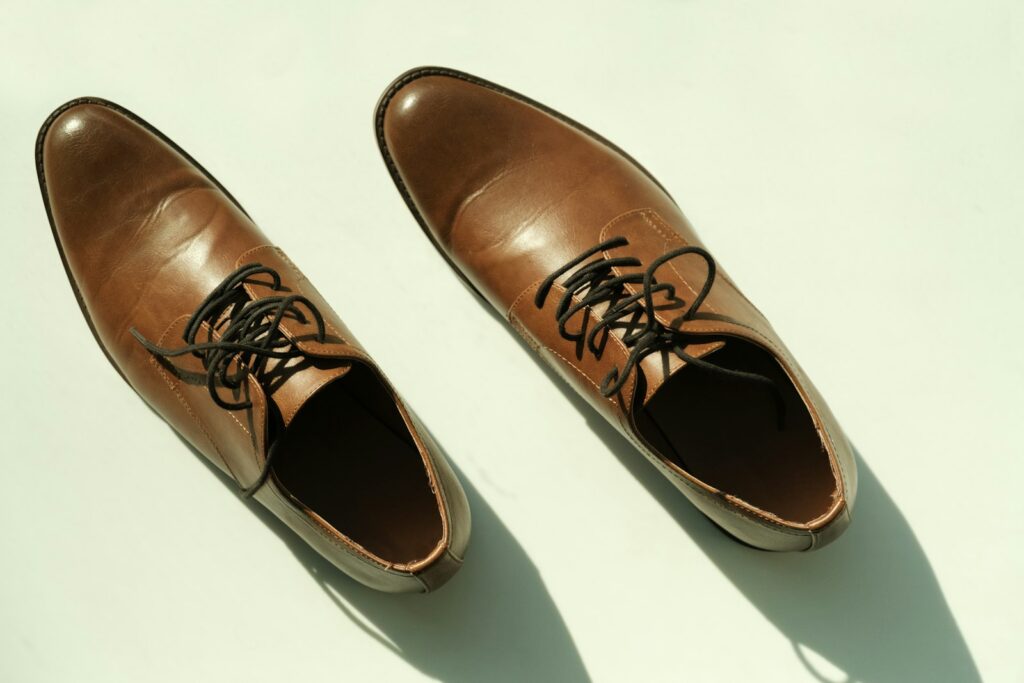
A good pair of leather shoes is one of the few things a man can buy that genuinely gets better with age. The leather softens, the shape settles around your foot and the color deepens into something no factory can reproduce. That only happens if you look after them. Neglected, the same shoes crack across the toe, stain at the first rainstorm and end up in the trash within a couple of years.
The good news is that proper care takes a few minutes a week and a small kit that costs less than a single decent pair. Here is how to do it.
The basic kit
You do not need a cabinet full of products. Start with these:
- Cedar shoe trees. The single most important item. Unvarnished cedar absorbs moisture from the lining and holds the shoe in shape while it dries.
- A horsehair brush. For daily dust removal and for buffing after polishing. Ideally two, one for dark polish and one for light.
- Leather cleaner or saddle soap. For lifting dirt and old polish every so often.
- Leather conditioner. Replaces the oils leather loses over time and keeps it supple.
- Cream polish in a matching color. Adds pigment to cover scuffs and nourishes the leather.
- Wax polish. Adds shine and a thin protective layer, especially on the toe and heel.
- Soft cotton cloths. Old T-shirts work perfectly.
Daily habits that do most of the work
Use shoe trees every time
Your feet sweat into your shoes all day. If the shoes dry without support, the leather shrinks and creases deepen into cracks. Put cedar trees in as soon as you take the shoes off, while they are still warm and slightly damp. Leave them in overnight at least.
Rotate your pairs
Wearing the same pair every day is the fastest way to wear it out. The moisture never has time to leave the leather. A simple rule is to give each pair a full day off between wears. Two good pairs rotated will last far longer than twice the life of one pair worn daily.
Use a shoehorn
Forcing your heel into a laced shoe crushes the heel counter, the stiff part at the back that holds your foot in place. Once it collapses, the shoe never fits the same way. Untie the laces properly and use a shoehorn. It takes three seconds.
Brush them off
A quick brush with horsehair before or after wearing removes dust and grit that otherwise work into the creases and scratch the finish.
The routine polish, every few weeks
How often depends on how much you wear them and in what conditions, but for a pair worn once or twice a week, a full clean and polish every few weeks is about right.
- Remove the laces. It lets you reach the tongue and the area under the eyelets, and keeps polish off the laces.
- Brush thoroughly. Get dust out of the welt, the seam where the upper meets the sole.
- Clean if needed. Use a small amount of leather cleaner or saddle soap on a damp cloth, working in small circles. Let the shoes dry completely.
- Condition. Apply a thin layer of conditioner with a cloth or your fingers, which warm the product and help it absorb. Leave it for a few minutes to soak in.
- Apply cream polish. Use a small amount in the matching color and work it in with small circles, paying extra attention to scuffs. Let it dry for around ten minutes.
- Buff. Brush briskly with horsehair until the dull film turns to a soft sheen.
- Add wax, if you want shine. Apply thin layers of wax polish to the toe cap and heel, the stiff areas that do not flex. Keep it off the flex points across the top of the foot, where heavy wax will crack.
Always test a new product on a hidden spot, like the inside of the heel, before using it on the whole shoe. Colors can come out darker than expected.
Dealing with rain, salt and stains
Water itself is not the enemy; drying badly is. If your shoes get soaked, stuff them loosely with newspaper for the first few hours to draw out moisture, then switch to shoe trees. Let them dry at room temperature. Never put leather shoes next to a radiator, in front of a heater or in the sun. Fast heat drying pulls oils out of the leather and leaves it stiff and prone to cracking.
Winter road salt leaves white tide marks as it dries. Wipe it off as soon as you can with a cloth dampened with a mix of water and a little white vinegar, then let the shoes dry and condition them once they are dry.
For oil or grease stains, act quickly: blot, never rub, and consider taking valuable shoes to a professional cobbler rather than experimenting.
Suede is different
Suede does not take polish or conditioner. Care for it with a suede brush to lift the nap and remove dirt, and a suede eraser for marks. Treat new suede with a protective spray before its first wear and reapply occasionally. If suede gets wet, let it dry naturally and brush it once dry to restore the texture.
When to see a cobbler
Quality shoes are built to be repaired. Goodyear welted shoes in particular can be resoled several times, which means the uppers can outlast many sets of soles. Take them in when:
- The heel is worn down unevenly, before the wear reaches the heel block itself.
- The sole is thinning at the ball of the foot or you can feel the ground through it.
- Stitching around the welt is coming loose.
Replacing a heel top early is a quick, cheap job. Waiting until the damage reaches the structure is not.
Storage
Store shoes with trees in, somewhere cool, dry and ventilated. Cloth shoe bags keep dust off while letting leather breathe. Avoid sealed plastic boxes for long periods, which trap moisture. For shoes you rarely wear, take them out every couple of months, brush them and give them a light conditioning so the leather does not dry out.
The payoff
Looking after leather shoes is a small weekly ritual that pays you back for years. Well kept shoes signal attention to detail in a way few other things do, and they keep your investment working long after cheaper pairs have been thrown away. If you want to put them to work, our guide to dressing for a job with no dress code covers when leather shoes are the right call.