
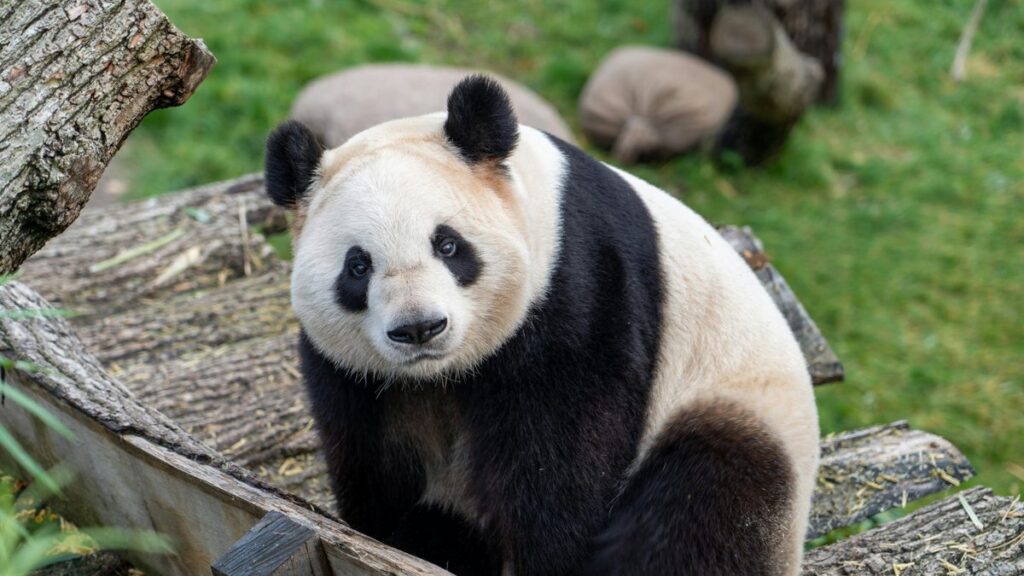
CHENGDU, China. Chinese panda Ai Hin is almost as smart as she is hungry.
The six-year-old panda at the Chengdu Research Base of Giant Panda Breeding duped her keepers into thinking she was pregnant. By producing more hormones, gaining weight and acting more lethargic, she ticked exactly the boxes keepers watch for in an expectant mother. Everyone at the base assumed a cub was on the way.
Researchers took it seriously enough to start planning the first ever live broadcast of a panda birth, which sounds slightly more like the end of Anchorman than a real thing.
According to panda experts, the animals quickly learn that “pregnant” comes with perks, and some have tried the same trick on their keepers before. Chengdu researcher Wu Kongju explained it like this:
After showing prenatal signs, the ‘mothers-to-be’ are moved into single rooms with air conditioning and around-the-clock care… They also receive more buns, fruits and bamboo, so some clever pandas have used this to their advantage to improve their quality of life.
So the cub never arrived, the broadcast never happened, and one panda spent a summer in a private air-conditioned room eating extra buns. Honestly, respect.
Why a panda can fool a room full of scientists
It is tempting to read this as a panda running a con, and the internet certainly did. The less fun but more interesting explanation is that giant panda biology is almost designed to make pregnancy hard to call.
The breeding window is tiny
A female giant panda is only fertile for two or three days a year, usually somewhere in the spring. Miss that window and the whole year is gone. That is why breeding centers monitor hormones so closely, and why any sign of success gets treated as a big deal.
Pregnancy length is a moving target
Gestation in giant pandas runs anywhere from roughly 95 to 160 days. The reason is delayed implantation: a fertilized egg can drift in the reproductive tract for weeks before it attaches and the pregnancy properly begins. So keepers cannot simply count forward from mating day and circle a due date on the calendar. They have to wait, watch and interpret.
The cub is ridiculously small
A newborn panda weighs somewhere around 90 to 130 grams, about 1/800th of its mother’s weight. A fetus that small is very hard to see on an ultrasound until late in the pregnancy, and a heavy adult panda that does not want to sit still for a scan does not make it easier. Weight gain in the mother tells you almost nothing, because the cub is a rounding error.
Hormones and behavior can mimic the real thing
This is the key part. Pandas can go through what is known as a pseudopregnancy, where hormone levels and behavior follow much the same path they would in a genuine pregnancy. The panda slows down, eats less, nests and spends more time alone. The chemistry is real even when there is no cub. Whether Ai Hin was “faking” in any deliberate sense or simply had a body that went through the motions, the result was the same: every signal the keepers relied on said pregnant.
Why the extra buns matter so much
Wu’s quote makes more sense once you look at what a panda eats the rest of the time. Around 99 percent of a giant panda’s diet is bamboo, and an adult gets through something like 9 to 14 kilograms of it a day to extract enough energy from a food that is barely worth eating. Pandas spend a huge share of their waking hours just chewing.
Against that backdrop, a mother-to-be package of fruit, specially made buns, more bamboo, a cool private room and constant attention is not a minor upgrade. It is the panda equivalent of being moved from economy to a lie-flat seat with a personal chef. If an animal learns that a certain set of behaviors leads to that outcome, it would be strange if it did not lean into them.
What it tells you about the breeding program
The Chengdu base opened in 1987 with six giant pandas rescued from the wild, and it has since become one of the best known panda breeding and research centers anywhere, as well as a major tourist stop. Its whole reputation rests on successful births, which is exactly why the staff erred on the side of caution. Moving a possibly pregnant panda into special care costs some bamboo and some staff hours. Treating a real pregnancy as a false alarm could cost a cub.
That trade-off explains why the “fake pregnancy” headline was a little unfair to the keepers. They did not get conned because they were careless. They got conned because the correct policy, when the stakes are that high and the signals that unclear, is to assume the best and prepare for a birth.
The internet’s favorite panda story
Stories like this travel because they flatter a feeling most of us have about animals: that they are quietly smarter and more self-interested than we give them credit for. A panda gaming the system for extra snacks is the kind of thing people share with a caption about their own dog, cat or roommate.
There is a grain of truth in that. Animals in human care learn fast which behaviors produce food, attention and comfort, and anyone who has lived with a pet that “limps” only when it wants to be carried knows the pattern. Whether that counts as scheming or just learning is mostly a question of how much of a story you want to tell.
The lesson for the rest of us
If there is a takeaway beyond “pandas are funny,” it is this: when the signals are noisy, you plan for the outcome that would hurt most to miss. The keepers did, and they ended up with a well-fed panda and a canceled live stream. Not a bad worst case.
And if you are the kind of person who admires a creature that found the one loophole in the system that gets you room service, you will probably enjoy our take on cooking one thing extremely well. Ai Hin clearly already knows the value of a really good bun.